Beyond Replacement: Rethinking Sustainability in Architectural Ironmongery

Architectural hardware sits in a unique position within the built environment and within sustainability. While individual components may be small, their long-term impact is significant. They are used constantly and often remain in service for decades. Door handles, hinges, and fittings can be activated hundreds or even thousands of times a day, meaning durability is not just a performance consideration, but a sustainability one.
Sustainability in ironmongery starts with one principle: consider the full building lifecycle before specifying anything new. Are we replacing hardware that could still perform, adapt, and add value without lessening the required function and design intent?
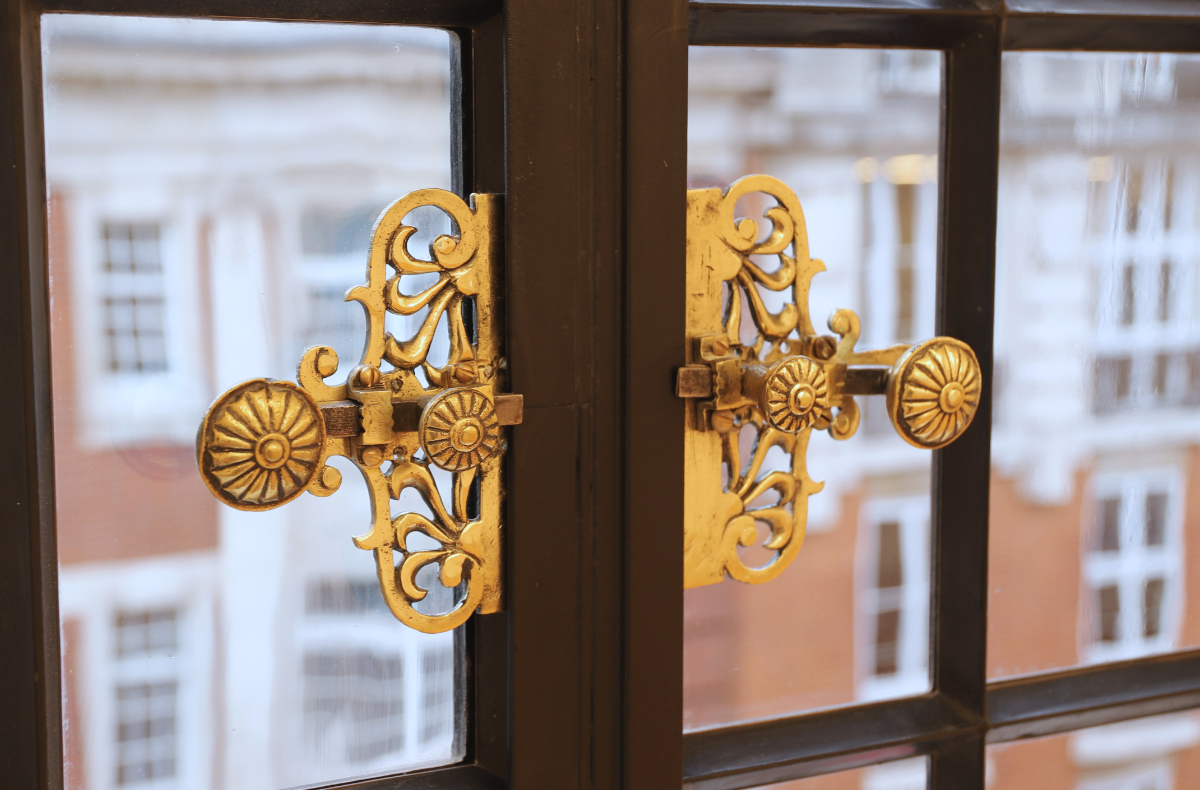
Retaining well-made existing hardware can preserve a subtle continuity in material language, especially in projects like Mortimer Street, where architectural character and commercial functionality need to coexist. Rather than erasing that history through wholesale replacement, the strategy allows it to remain legible while still meeting performance standards.
Extending the lifecycle of materials already in circulation reduces waste, lowers embodied carbon, and preserves the character that only time can create.
This matters because repeated replacement carries a hidden environmental cost. Manufacturing, transportation, and installation all accumulate impact over time. A well-engineered handle designed for 20–30 years of service life is often far more sustainable than using cheaper products that require frequent replacement.
Of course, new products still have a role to play. But the objective should be balance: supplementing retained elements with carefully selected, high-quality additions that are built to last and tested for high-cycle performance in demanding environments.
Sustainability isn’t a specification checkbox. It’s a mindset:
- Retain where possible
- Refurbish where practical
- Replace only where necessary
Because when we consider the full building lifecycle, the most sustainable hardware is often the one that’s already in use.
We pride ourselves on taking the time to understand the buildings we work on. Find our more about the meticulous restoration work we undertook at 93 Mortimer Street to preserve the authenticity of the building while allowing it to function as a modern space.

93 Mortimer Street refurbished window fittings